
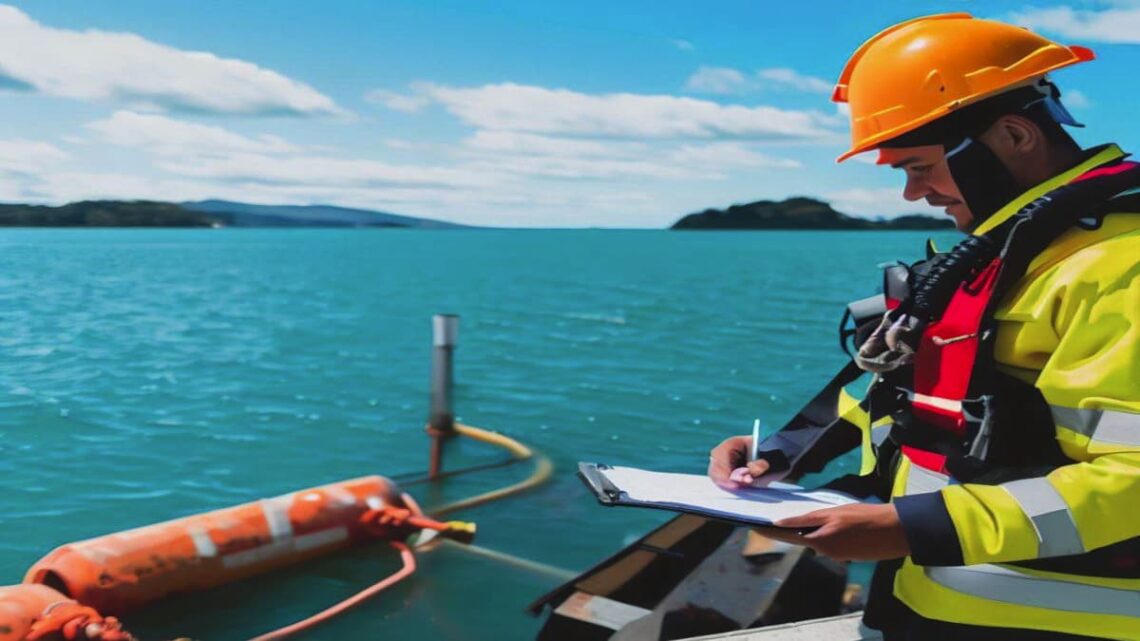
Online education has transformed how we learn languages, earn degrees, and pick up professional skills. Less well known is that it has also reached one of the world’s oldest professions: seafaring. Today, aspiring and experienced crew members alike can complete part of their mandatory maritime safety training from a laptop at the kitchen table. Here is how digital learning and the STCW convention come together.
The global rulebook for seafarers
Every commercial seafarer on the planet, from a deckhand on a fishing vessel to the captain of a container ship, falls under the STCW convention: the Standards of Training, Certification and Watchkeeping for Seafarers. Established by the International Maritime Organization in 1978 and modernized through the Manila amendments of 2010, it sets the minimum training standards that every maritime nation has agreed to uphold.
For crew members in remote regions or island nations, this used to mean expensive travel to accredited training centers abroad. Distance was a genuine barrier to entering the industry. Online learning has changed that equation dramatically.
Which courses work online, and which do not
Let’s be clear: you cannot learn to fight a fire or board a life raft from behind a screen. Practical safety modules will always require in-person training at a facility with pools, fire grounds, and equipment. However, a substantial part of the STCW framework is theoretical, and those modules translate perfectly to e-learning.
Courses commonly offered online include security awareness, designated security duties, crowd management, crisis management and human behavior, and personal safety and social responsibilities. Food safety and hygiene courses for galley staff are also widely available digitally.
How the digital route works
The process mirrors any well-designed online study program. After enrolling in an stcw course, you get immediate access to the learning material, which you can work through at your own pace on a computer, tablet, or phone. Progress is saved automatically, so you can study in short sessions between other commitments, or even during a contract at sea if the vessel has internet.
The course concludes with a multiple-choice assessment. Pass it, and you receive a download link for your certificate straight away, with the option of a signed and stamped original delivered by mail. There are no semester dates, no waiting lists, and no classroom schedules to plan around.
Accreditation: the non-negotiable detail
As with any online qualification, the provider’s credentials determine the value of yours. A legitimate stcw certificate must be issued under the approval of a recognized flag state, such as the Netherlands’ shipping inspectorate, the Liberian registry (LISCR), the Bahamas, or Panama. Certificates from approved providers are accepted by employers in more than seventy countries, which is precisely what makes them worth earning.
A practical first step toward the water
For anyone weighing up a maritime career, whether on superyachts, cruise ships, ferries, or cargo vessels, online STCW modules are an accessible and affordable starting point. You can complete several certificates before ever visiting a training center, arrive at your practical courses better prepared, and present recruiters with a tidy, up-to-date portfolio of qualifications. In an industry built on tradition, that is a thoroughly modern advantage.